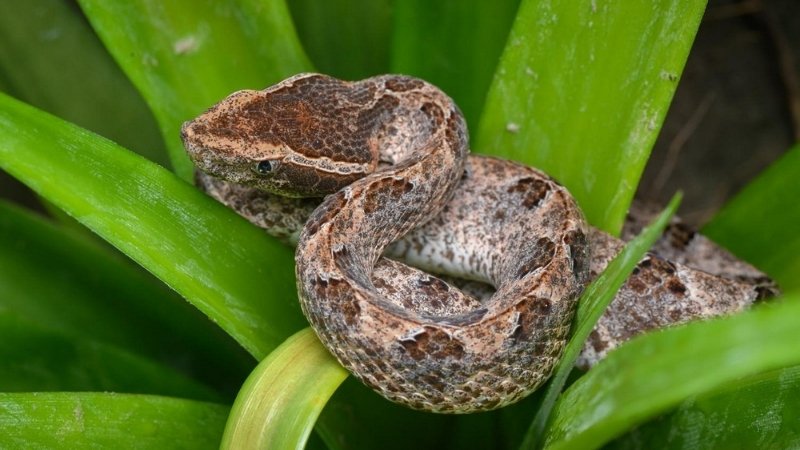


- Size: The maximum overall length can reach 104 cm. Females are generally longer and larger than males. Most individuals encountered are approximately 65–75 cm long .
- Color: The back is reddish-brown to reddish-gray. The pattern is very complex with 19–31 large dark brown or black triangular streaks on the sides, with the apex pointing towards the spine. The head is dark reddish-brown or blackish-brown on the upper surface.
- Head: Distinctly triangular in shape, wide at the back. Muzzle pointed, pointing forward. A wide, dark brown or chestnut-colored streak behind the eye, with a white or cream stripe above it; pupils are vertically elliptical .
- Body: The body is stout, with a slightly triangular cross-section and a faint but distinct dorsal ridge . The tail is short, slender, and very distinct from the body.
Calloselasma rhodostoma
Calloselasma rhodostoma
- Poisonous
- Do not touch.
- Snake repellent is ineffective.
The Malayan pit viper has the scientific name Calloselasma . Rhodostoma belongs to the viper family ( Viperidae ), genus Calloselasma. It is considered one of the leading causes of snakebites in Vietnam.
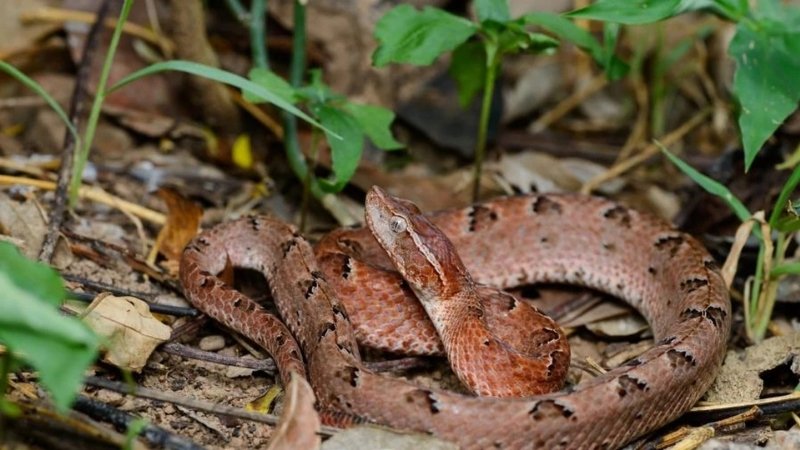
- Habitat: Primarily active at dusk and night (sometimes during the day). This is a ground-dwelling and quite secretive species. It often lies in ambush among dry leaves or hides beneath vegetation. Its coloration provides excellent camouflage against the forest floor.
- Reproduction: Unlike some other pit viper species, the Malayan pit viper lays eggs. Each clutch can contain 15-40 eggs. The eggs are guarded by the female until they hatch.
- Diet: Primarily small mammals, frogs and toads, sometimes including birds and lizards.
1
Reassure the victim
Keep the victim still and limit movement to slow the spread of the venom. Do not allow the victim to walk around.
2
Immobilize the wound
Clean the bite wound with soap and water. Apply a light compression bandage (not a tourniquet) above the bite, keeping the bitten area lower than the heart.
3
Go to a medical facility
Transport the victim to the nearest hospital as soon as possible. If possible, take a picture of the snake so the doctor can identify the appropriate antivenom.
DO NOT cut the wound, DO NOT suck out the venom, DO NOT apply folk remedies.
The Malayan pit viper is a dangerous venomous snake. After being bitten, victims will experience immediate, intense pain, bruising, swelling , and blisters within 1-2 hours. The bite causes serious blood disorders because the venom contains cytotoxic and hemotoxic agents , as well as thrombin- like enzymes that disrupt blood clotting, leading to non-clotting blood, internal bleeding, bleeding gums, and shock, which can be fatal. Many victims suffer permanent sequelae such as limb deformities due to necrosis.
This species is particularly dangerous to workers on rubber plantations and rice farmers because they often hide under layers of dry leaves, where their coloration makes them very difficult to spot with the naked eye.
SPECIES INFORMATION
Snake species:
Calloselasma
Species:
Viperidae
Common name:
Calloselasma rhodostoma
Nameplate:
Calloselasma rhodostoma
Distribution area
Paracel Islands
Spratly Islands
Distribution: Distributed in several provinces in central and southern Vietnam, with Gia Lai province as the northernmost boundary.
Other images