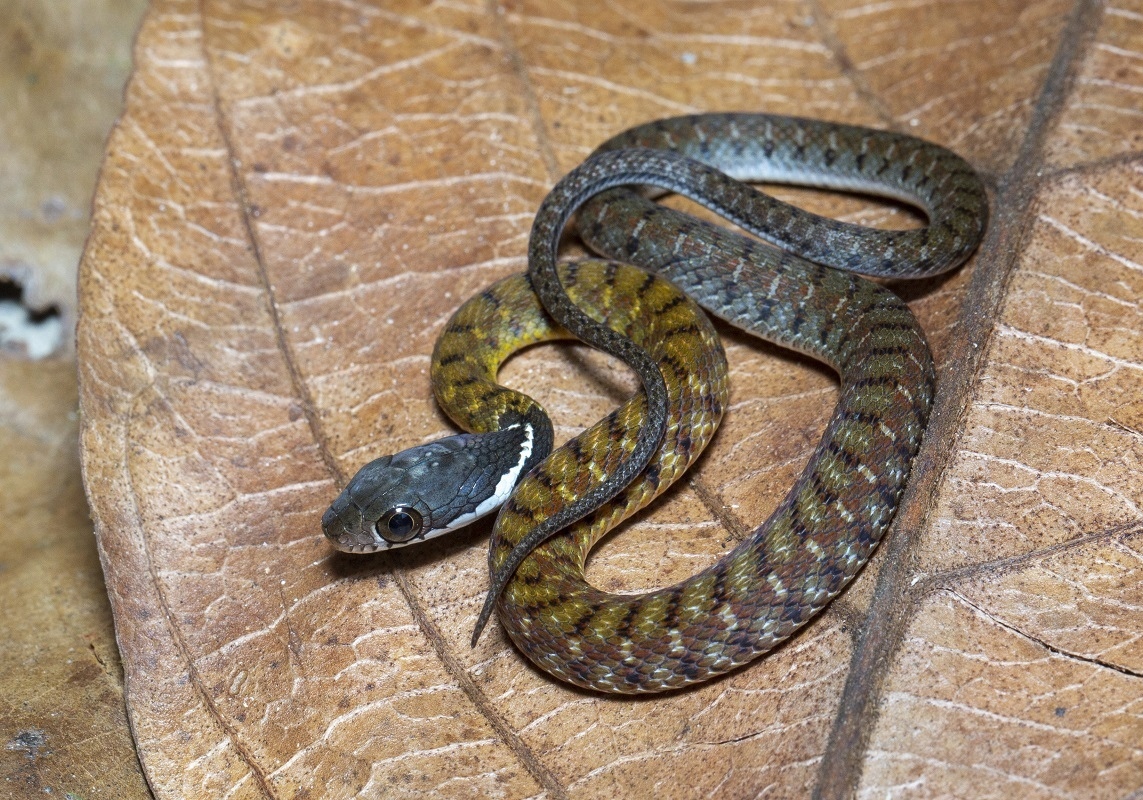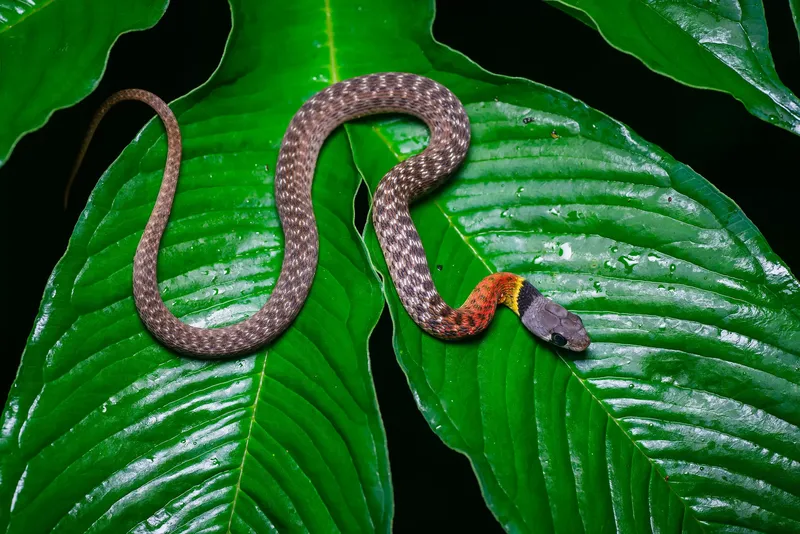


- Size: The maximum recorded overall length is 980 mm . The longest female ever recorded was 978 mm ; the longest male was 715 mm . Most individuals found were approximately 650–700 mm long .
- Coloration: The back and sides are olive gray or olive brown. The neck and front of the body are sometimes reddish-brown or orange-brown with irregular black spots. A row of 43–55 cream or yellow spots is present on either side of the back. The head is dark olive gray or dark reddish-brown; the upper lip scales are white, cream, or pale yellow with a black border. The iris is dark reddish-brown. The belly is cream or pale yellow, mottled with dark gray, denser at the rear.
- Head: The head is oval-shaped, elongated, and distinctly different from the neck. The eyes are large, with a diameter approximately 5–3.0 times the distance between the lower edge of the eye and the edge of the lip, and round pupils.
- Body: The body is long and slender, slightly flattened; quite thin in males and somewhat stocky in older females. The tail is long, thin, and tapers gradually.
Rhabdophis chrysargos
Rhabdophis chrysargos
- Poisonous
- Do not touch.
- Snake repellent is ineffective.
The yellow-necked grass snake has the scientific name Rhabdophis . chrysargos Schlegel , 1837. This is a species of snake belonging to the family Colubridae , genus Rhabdophis .
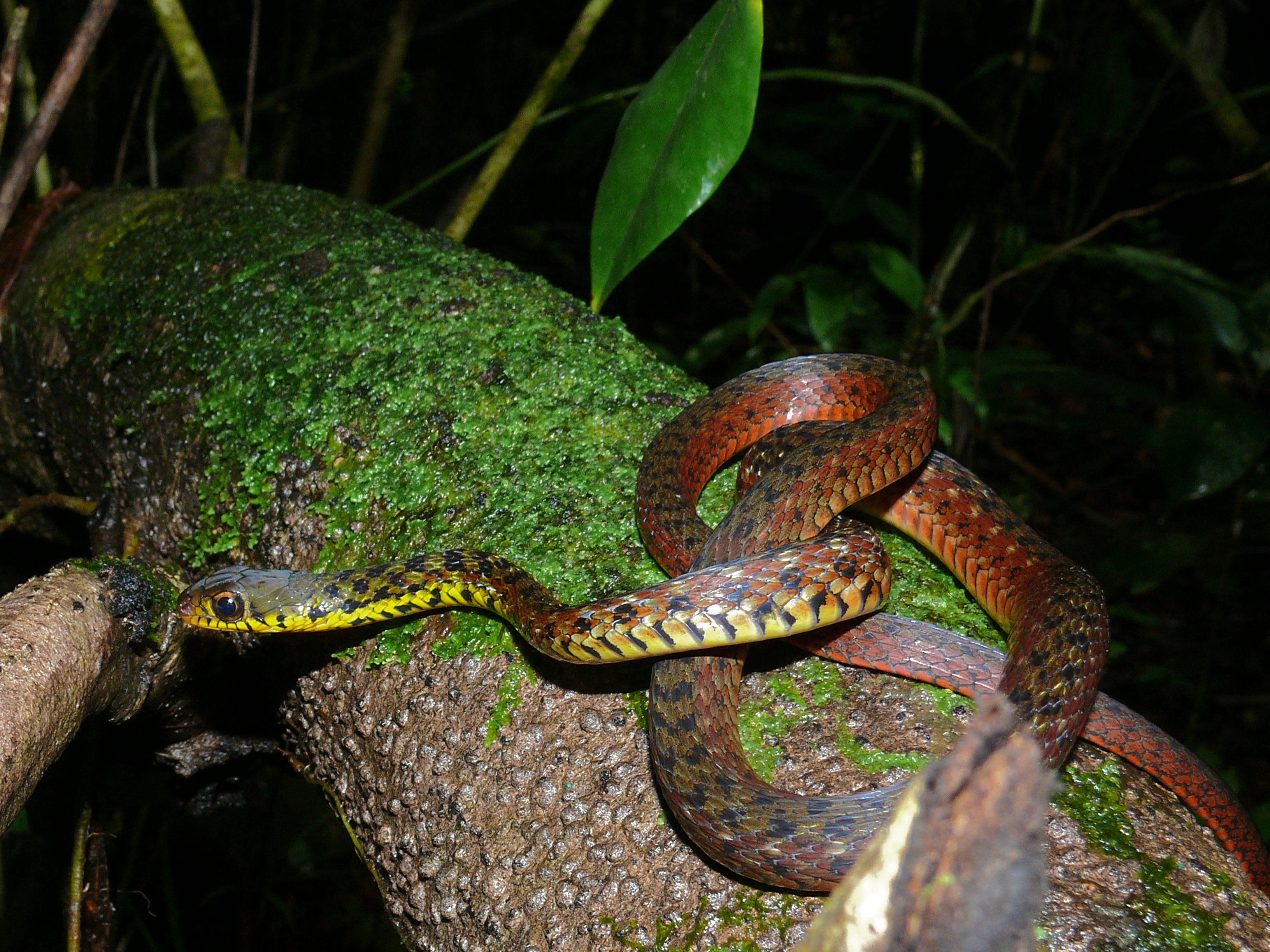
- Habitat: chrysargos is a diurnal species, particularly active in the early morning. It lives in tropical evergreen rainforests and mixed forests from altitudes of 100 m to 1,680 m . It is commonly found along fast-flowing mountain streams, swamps, rice paddies, and tea plantations.
- Food: Their main food sources are frogs, toads, tadpoles, fish, lizards, and sometimes birds and small mammals.
- Reproduction: This species lays eggs ( oviparous ), with each clutch containing 3 to 10 eggs. The incubation period is 51 to 61 days.
1
Reassure the victim
Keep the victim still and limit movement to slow the spread of the venom. Do not allow the victim to walk around.
2
Immobilize the wound
Clean the bite wound with soap and water. Apply a light compression bandage (not a tourniquet) above the bite, keeping the bitten area lower than the heart.
3
Go to a medical facility
Transport the victim to the nearest hospital as soon as possible. If possible, take a picture of the snake so the doctor can identify the appropriate antivenom.
DO NOT cut the wound, DO NOT suck out the venom, DO NOT apply folk remedies.
No information available. R. chrysargos is not aggressive and rarely attempts to bite when handled. However, caution is advised as species in the genus Rhabdophis are venomous, and some species within the genus have caused serious snakebite incidents in humans.
SPECIES INFORMATION
Surname:
Rhabdophis
Snake species:
Rhabdophis
Species:
Colubridae
Common name:
Rhabdophis chrysargos
Nameplate:
Rhabdophis chrysargos
Distribution area
Paracel Islands
Spratly Islands
Distribution: Widely distributed throughout the country.
Other images