Rhabdophis siamensis - Viet Snake Rescuer

Rhabdophis siamensis

Rhabdophis siamensis

  • Poisonous
  • Do not touch.
  • Snake repellent is ineffective.

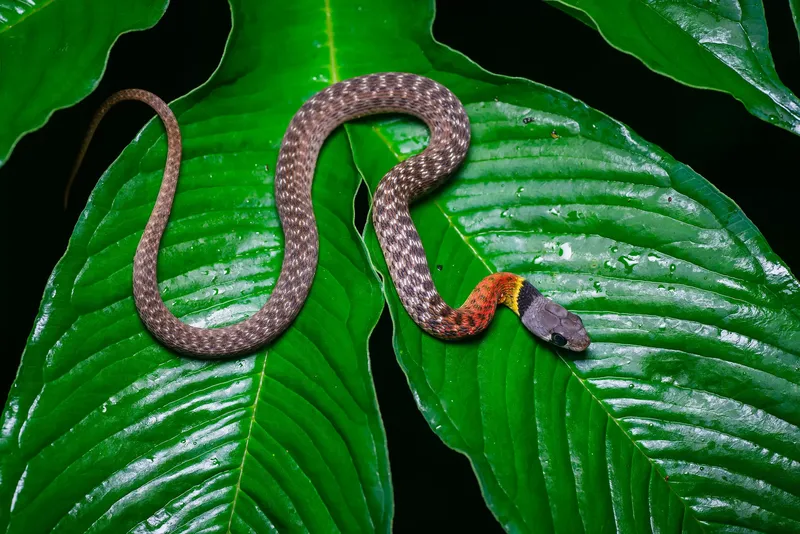
The Siamese red-necked grass snake has the scientific name Rhabdophis . siamensis Mell , 1929. This is a species of snake belonging to the family Colubridae , genus Rhabdophis . It is endemic to the Indochinese peninsula.

Rhabdophis siamensis
  • Size: The maximum recorded overall length is 772 mm in females. The longest males reached 737 mm .
  • Coloration: The dorsal surface is gray, dark gray, or olive brown. The dorsal scales have black or dark brown spots forming an irregular spiderweb-like pattern. The most distinctive feature is the bright red or crimson neck, extending approximately 5 to 2.0 times the length of the head (equivalent to 15–25 rows of ventral scales) before fading. The tail is similar in color to the body, with a dark brown or black border at the tip. The belly is cream or yellowish-cream.
  • Head: The head is long and slender, clearly distinct from the neck. The eyes are very large, with round pupils.

Body: The body is stocky, especially plump in larger females, and cylindrical in shape. The nuchal glands are prominent and visible.
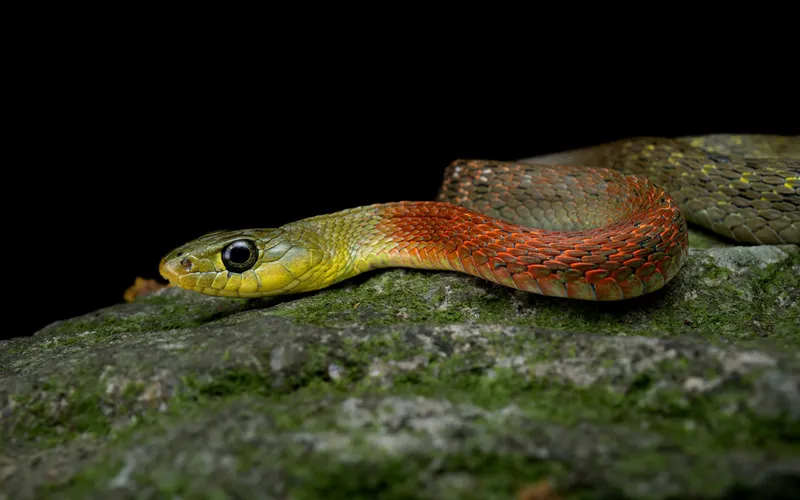
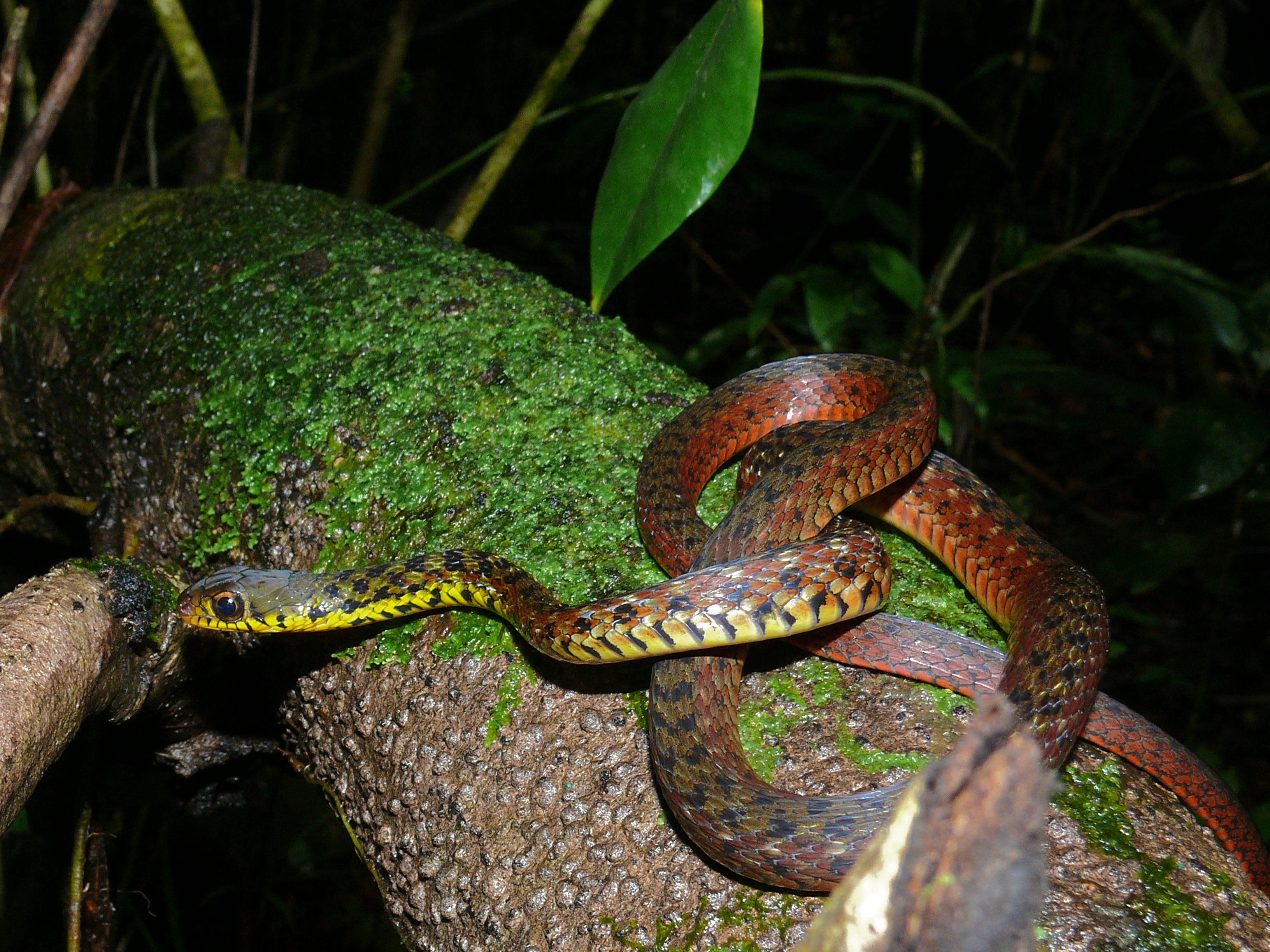
  • Habitat: Primarily active during the day and at dusk. Lives both aquatic, terrestrial, and semi-arbiter. Often found near bodies of water such as rivers, streams, rice paddies, and swamps up to an altitude of 1,700 m.
  • Food: Their diet includes frogs, toads, tadpoles, and fish.
  • Reproduction: Lays eggs, with each clutch containing up to 17 eggs.
1

Reassure the victim

Keep the victim still and limit movement to slow the spread of the venom. Do not allow the victim to walk around.
2

Immobilize the wound

Clean the bite wound with soap and water. Apply a light compression bandage (not a tourniquet) above the bite, keeping the bitten area lower than the heart.
3

Go to a medical facility

Transport the victim to the nearest hospital as soon as possible. If possible, take a picture of the snake so the doctor can identify the appropriate antivenom.
DO NOT cut the wound, DO NOT suck out the venom, DO NOT apply folk remedies.

Although not classified as a typical venomous snake, Rhabdophis Siamensis possesses a very potent venom, particularly in its hind fangs. The venom contains potent anticoagulant toxins, including Factor X and prothrombin activators , which lead to severe coagulation disorders, reducing the blood’s ability to clot. The bite causes acute pain, prolonged bleeding, bruising, moderate edema, and paralysis of the bitten area. Serious systemic symptoms include subcutaneous hemorrhage, bleeding gums, vomiting blood, hematuria, and potentially secondary renal failure. Severe bites can be life-threatening. Extreme caution is required when handling this species.

Glands (or glands ) are located on the back of the neck for both intimidation and defense.

SPECIES INFORMATION

Surname:
Rhabdophis
Snake species:
Rhabdophis
Species:
Colubridae
Common name:
Rhabdophis siamensis
Nameplate:
Rhabdophis siamensis

Distribution area

Paracel Islands
Spratly Islands

Distribution : Extends from the North Central provinces to the South of Vietnam.