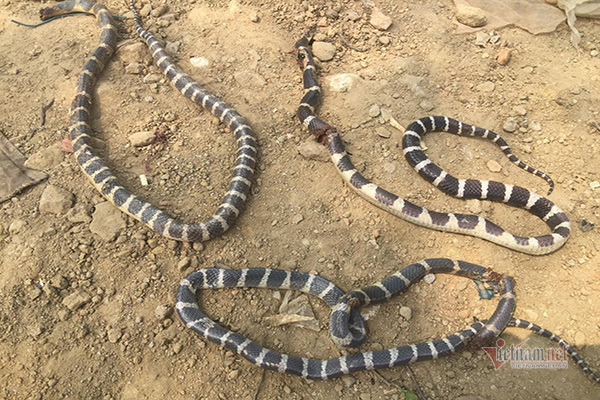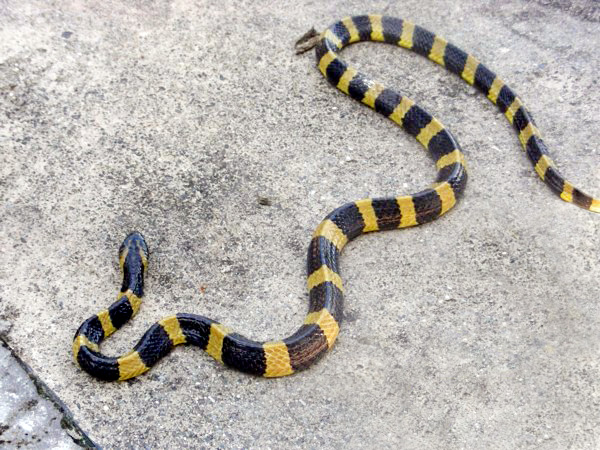


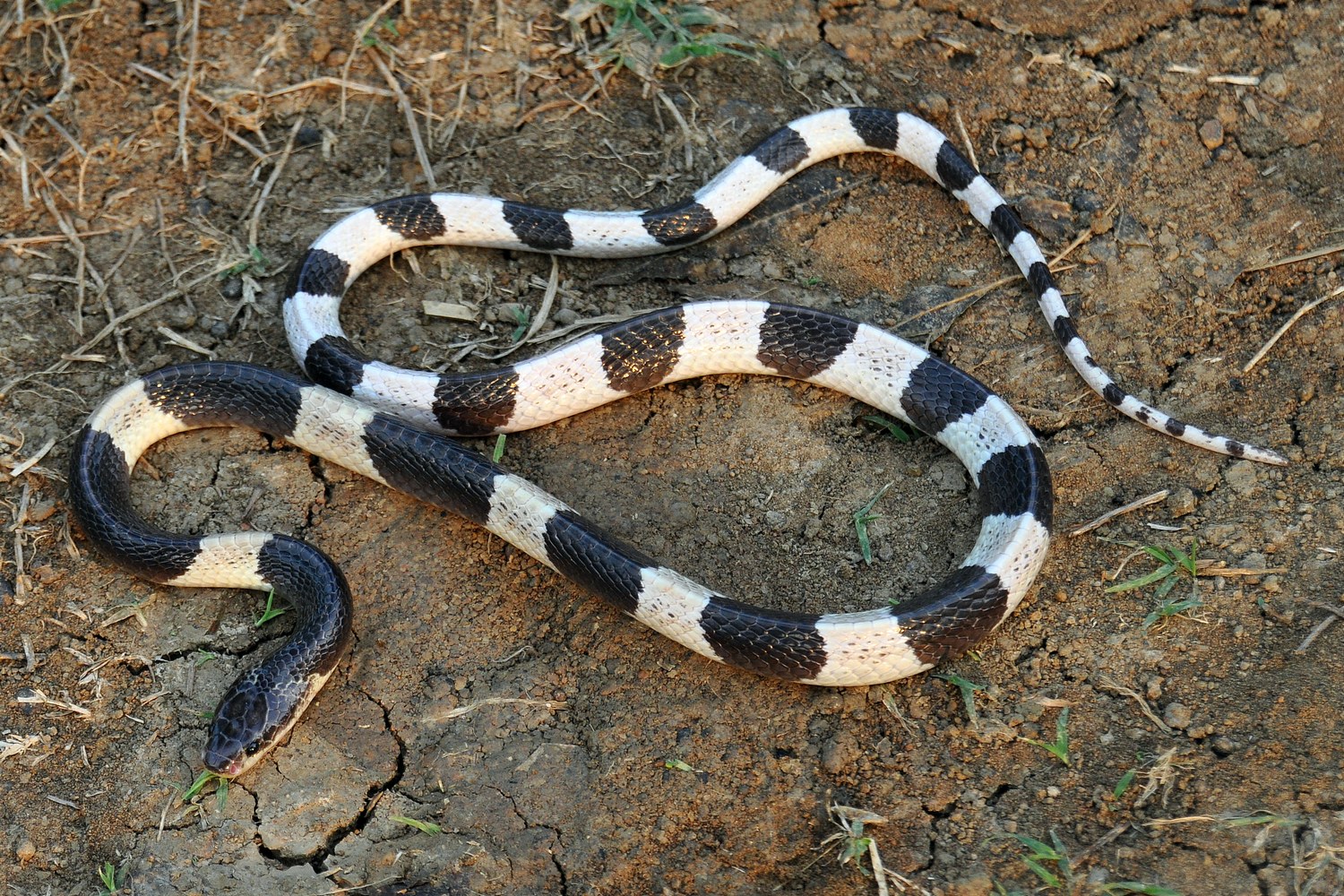
- Size: The maximum length can reach 160cm, but individuals are commonly found to be around 120-130cm.
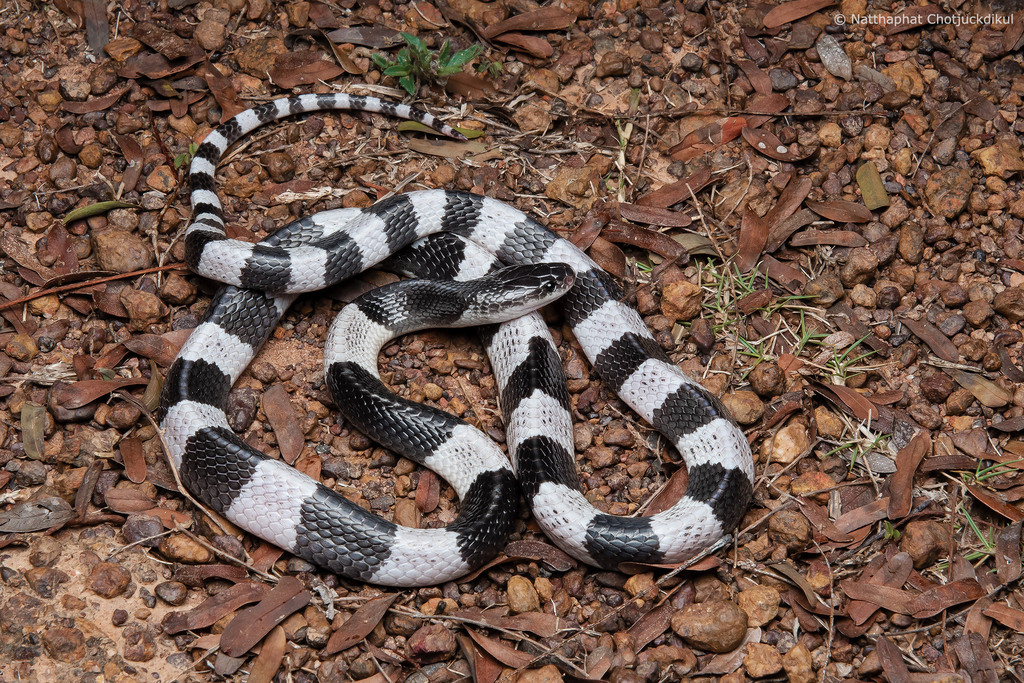
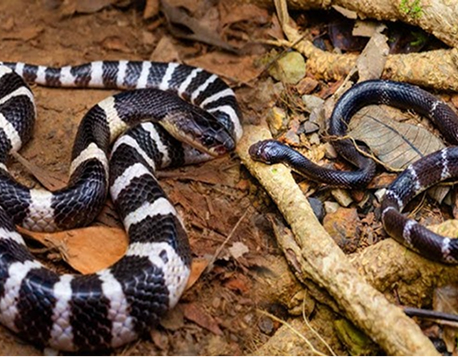
- Color: The dorsal surface is black or dark bluish-black. The pattern consists of 18–26 broad white or cream-colored bands extending down to the edges of the ventral scales. These white bands are trapezoidal in shape, wider towards the belly. On the posterior part of the body, the white bands are often speckled with horizontal black streaks. The tail is similar in color to the body with 7–10 white bands. The belly is white or yellowish-cream. The underside of the tail is cream or white with broad black bands.
- Head: Oval-shaped, short, thick, indistinct from the neck. The top of the head is black, the upper lip scales are white or cream-colored. Eyes are small, pupils are round. The muzzle is short and blunt when viewed from above.
- Body: Robust, slightly triangular in cross-section. Tail is somewhat short, tapering and pointed at the tip.
Bungarus candidus
Bungarus candidus
- Poisonous
- Do not touch.
- Snake repellent is ineffective.
The southern banded krait has the scientific name Bungarus candidaus LINNAEUS, 1758 belongs to the Elapidae family , genus Bungarus. It is an extremely dangerous venomous snake, relatively large within the Bungarus genus .
- Habitat: This southern krait lives in humid tropical forests, secondary rainforests, mangrove forests, cultivated areas such as rice paddies, plantations, and near villages. It is often found near bodies of water such as riverbanks, waterfalls, and canals. This krait is nocturnal and avoids moving during the day. At night, it forages on the forest floor but also appears in cultivated areas and on trails. It is a ground-dwelling and secretive species, although there have been instances of it climbing trees. This species is willing to swim in water.
- Reproduction: This species is egg-laying. Females lay 4 to 10 eggs per clutch in burrows in the ground. A “fighting dance” behavior between males has been observed.
- Diet: Primarily feeds on other snake species such as the blind snake, rat snake , tree snake, king cobra, whip snake, etc. It also eats lizards, frogs, small mammals, and even birds.
1
Reassure the victim
Keep the victim still and limit movement to slow the spread of the venom. Do not allow the victim to walk around.
2
Immobilize the wound
Clean the bite wound with soap and water. Apply a light compression bandage (not a tourniquet) above the bite, keeping the bitten area lower than the heart.
3
Go to a medical facility
Transport the victim to the nearest hospital as soon as possible. If possible, take a picture of the snake so the doctor can identify the appropriate antivenom.
DO NOT cut the wound, DO NOT suck out the venom, DO NOT apply folk remedies.
Bungarus candidus is a dangerous venomous snake with a very potent venom containing pre -synaptic neurotoxin . Neurotoxicity blocks the transmission of signals to the skeletal muscles. Initially, the bite is almost painless or only slightly painful with minimal bleeding, followed by numbness. This is a dangerous fact because victims often overlook it for hours. Systemic symptoms appear after minutes or hours: headache, abdominal pain, dizziness, stomach cramps, and facial paralysis. Severe bites lead to generalized paralysis, especially of the respiratory system. The mortality rate is high if the victim does not receive timely medical treatment.
SPECIES INFORMATION
Surname:
Elapidae
Snake species:
Bungarus
Species:
Elapidae
Common name:
Bungarus candidus
Nameplate:
Bungarus candidus
Distribution area
Paracel Islands
Spratly Islands
Distribution: Central and southern Vietnam.
Other images