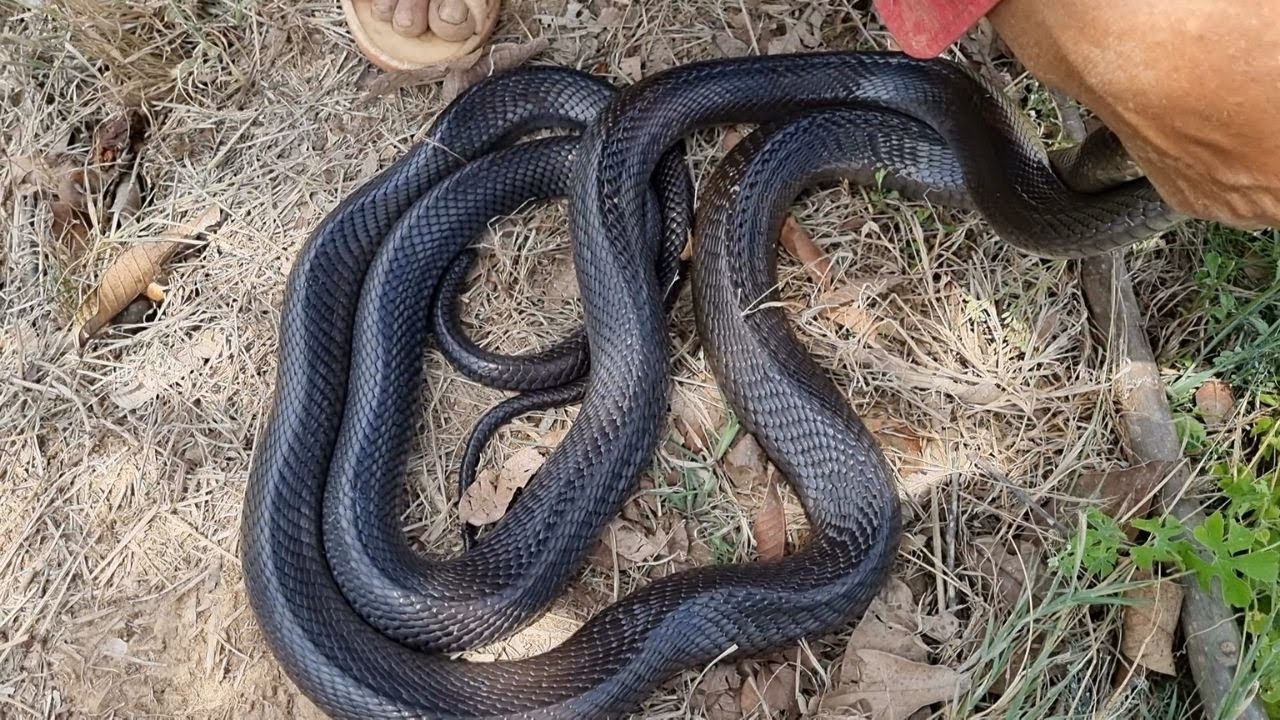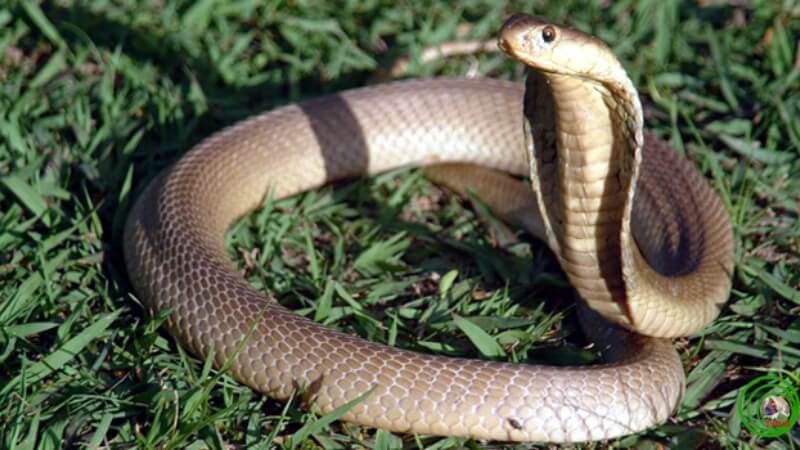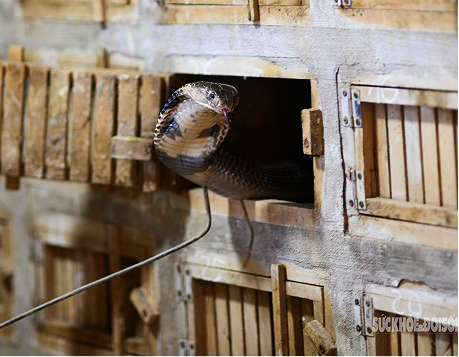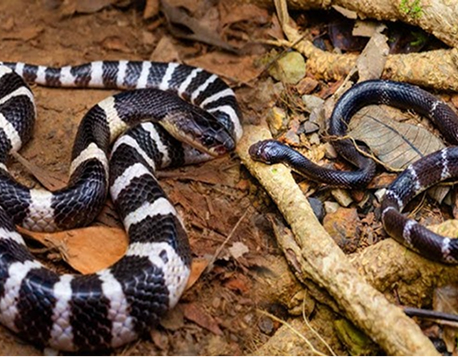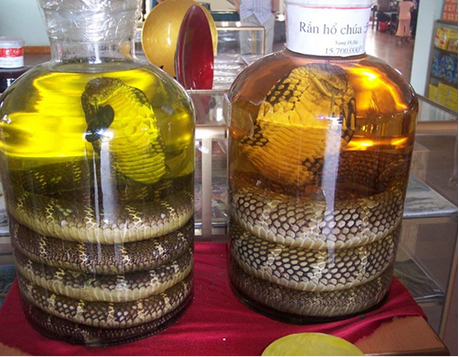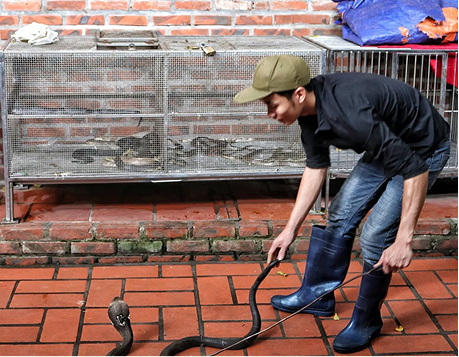


- Size: Cobra snakes can reach a size of 230cm, but individuals are most commonly found measuring around 120-150cm in length.
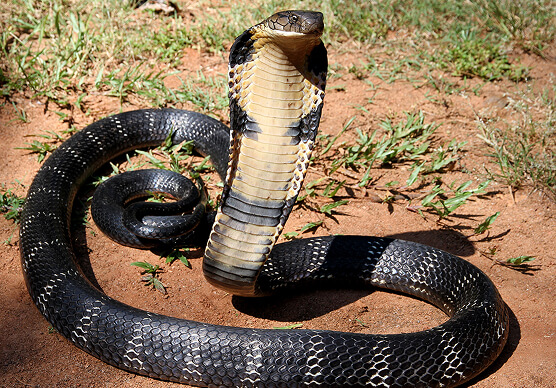
- Coloration: The dorsal surface is highly variable, ranging from shades of brown to black. Some populations exhibit pale horizontal stripes (3-4 rows of scales). The “mono-eyeglass” marking (O-shaped) on the gills is a typical characteristic, sometimes appearing as a U or V shape. Juveniles are dark in color, usually dark brown or uniformly black; the markings on the gills are very distinct, white, yellow, or orange.
- Head: Short, thick, oval-shaped head, distinct from the neck. Fully developed gills, moderately wide, beginning just behind the head. Snout short and blunt when viewed from above. Eyes small with round pupils.
- Body: The body is sturdy and strong, with a cross-section that is somewhat triangular or appears flattened when viewed from above in the dorsal-ventral direction. The dorsal surface may be almost patternless or have distinct, pale horizontal stripes. The belly is light in color at the front, darkening towards the back, and always has a dark horizontal stripe just behind the throat.
Naja kaouthia
Naja kaouthia
- Poisonous
- Do not touch.
- Snake repellent is ineffective.
The cobra has the scientific name Naja kaouthia Lesson, 1831 belongs to the Elapidae family, genus Naja.
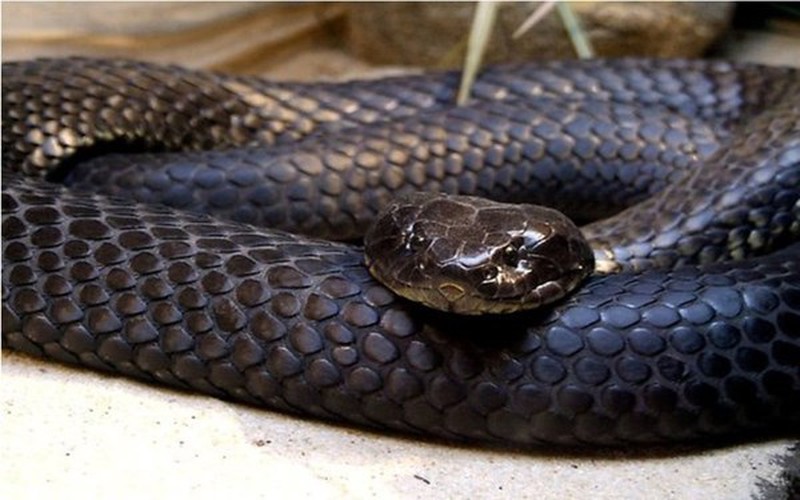
- Habitat: Cobras are commonly found in evergreen and monsoon forests, from lowlands up to altitudes of at least 1,000 m. They are well adapted to environments altered by human activity, often appearing near rice paddies, swamps, villages, and bodies of water. They are primarily active at dusk and at night, but can also be active during the day. They are terrestrial but excellent swimmers. During the day, they take shelter in tree hollows, animal burrows, or under vegetation.
- Reproduction: They are oviparous (laying eggs). Females lay 15 to 30 eggs in underground burrows or nests they build themselves. Hatching time is 50 to 84 days. Newly hatched chicks are approximately 250–350 mm long .
- Diet: Primarily feeds on frogs, toads (genus Bufo ), small mammals, lizards, other snakes, and occasionally fish.
1
Reassure the victim
Keep the victim still and limit movement to slow the spread of the venom. Do not allow the victim to walk around.
2
Immobilize the wound
Clean the bite wound with soap and water. Apply a light compression bandage (not a tourniquet) above the bite, keeping the bitten area lower than the heart.
3
Go to a medical facility
Transport the victim to the nearest hospital as soon as possible. If possible, take a picture of the snake so the doctor can identify the appropriate antivenom.
DO NOT cut the wound, DO NOT suck out the venom, DO NOT apply folk remedies.
The cobra is a very dangerous venomous snake. Its venom contains highly potent cytotoxic and neurotoxic compounds. It causes immediate, intense pain and swelling at the bite site , potentially leading to extensive and deep tissue necrosis around the bitten area. Systemic symptoms include headache, vomiting, abdominal pain, drooping eyelids, difficulty speaking, facial paralysis, and ultimately death from respiratory failure within 1 to 5 hours of being bitten if left untreated.
Behavior: Considered calmer than other Asian cobra species. When threatened, it will raise its front body, flare its hood, and emit a characteristic hiss before attacking.
SPECIES INFORMATION
Surname:
Elapidae
Snake species:
Naja
Species:
Elapidae
Common name:
Naja kaouthia
Nameplate:
Naja kaouthia
Distribution area
Paracel Islands
Spratly Islands
Distribution: Distributed in the central and southern provinces of Vietnam.
Other images