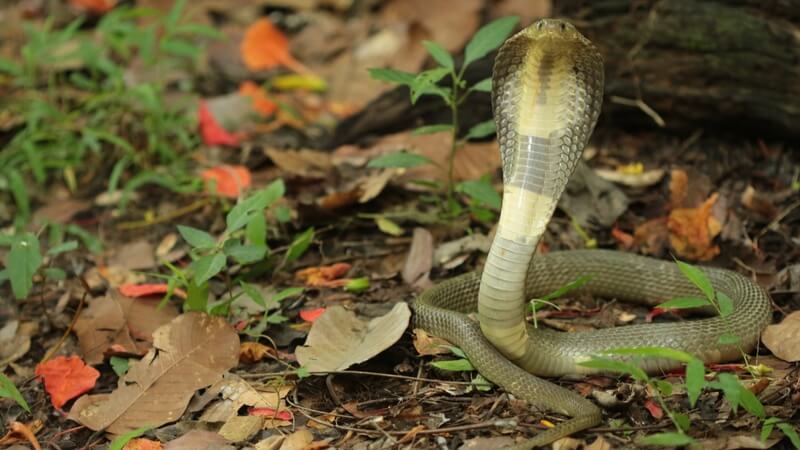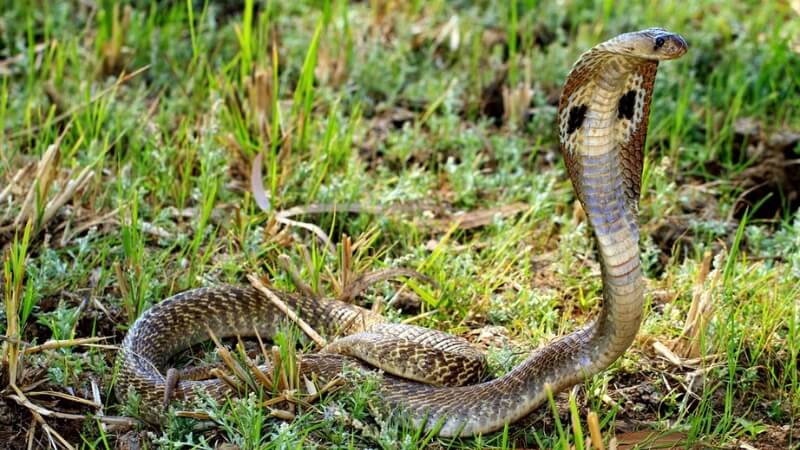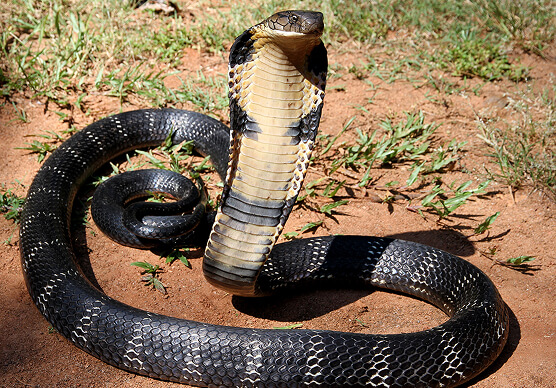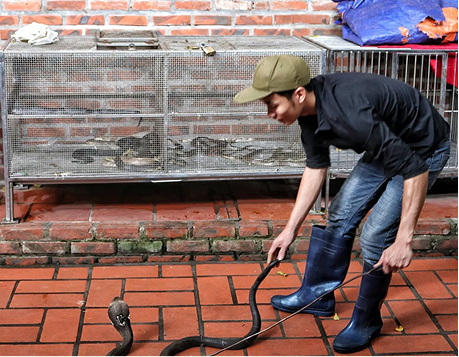


- Size: Medium, can reach up to 160cm but is most commonly seen in the range of 90-130cm.
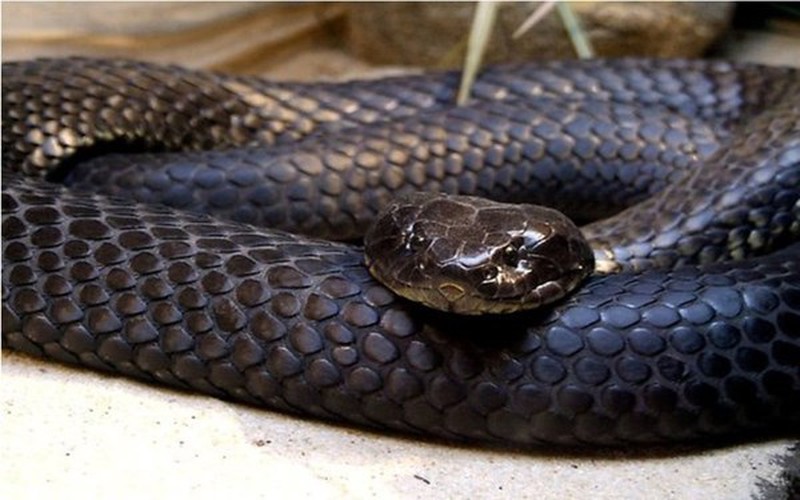
- Color: The dorsal surface is typically dark brown, dark grayish brown, blackish brown, or black (in central and southeastern Thailand and Laos), or olive, greenish olive, olive brown, or light brown (in northern and northeastern Thailand, Cambodia , and Vietnam). The gill pattern is evenly distributed. When present, it usually resembles a typical pair of eyeglasses, consisting of two pale ocelli spots connected by a pale U- or V-shaped curve. Juveniles are usually uniformly dark or black and white like adults.
- Head: The head is elongated, oval-shaped, thick, and distinctly different from the neck. The snout is short and blunt when viewed from above. The eyes are small, with round pupils. The head is the same color as the body or slightly more bluish/gray. The chin, lower lip scales, and throat are white or cream-colored, sometimes with black spots. Teeth are well-developed for venom-spitting ability.
- Body: Sturdy, appearing somewhat triangular in cross-section or slightly flattened when viewed from a dorsal-ventral perspective. Gills are fully developed, broad and long, beginning just behind the head.
Naja siamensis
Naja siamensis
- Poisonous
- Do not touch.
- Snake repellent is ineffective.
The Indochinese spitting cobra, also known as the Naja, has the scientific name Naja Siamensis Laurenti, 1768 belongs to the Elapidae family, genus Naja . This species is easily confused with the Indian cobra ( Naja naja ) when searching on online platforms.
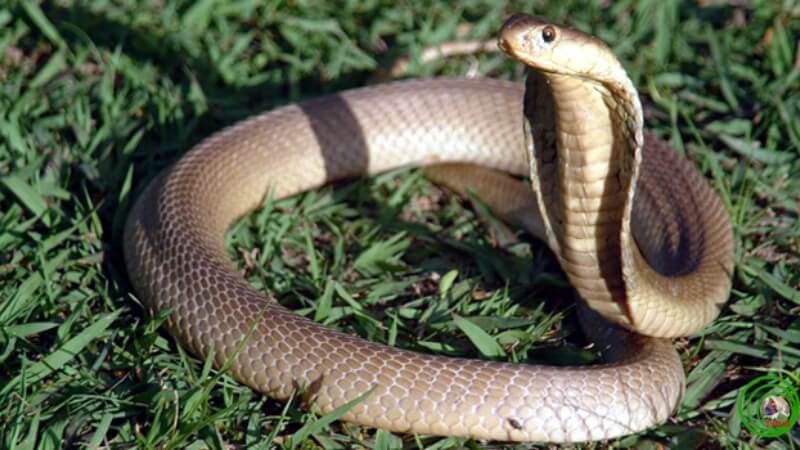
- Habitat: This agile snake is terrestrial, most active at dusk and night, but may also be active during the day. It inhabits the edges of evergreen forests, deciduous monsoon forests, secondary forests, scrublands, cultivated land and rice paddies, from sea level to an altitude of at least 600 m.
- Reproduction: Lays eggs.
- Diet: Primarily feeds on small mammals (mice), amphibians, lizards, and other snakes.
1
Reassure the victim
Keep the victim still and limit movement to slow the spread of the venom. Do not allow the victim to walk around.
2
Immobilize the wound
Clean the bite wound with soap and water. Apply a light compression bandage (not a tourniquet) above the bite, keeping the bitten area lower than the heart.
3
Go to a medical facility
Transport the victim to the nearest hospital as soon as possible. If possible, take a picture of the snake so the doctor can identify the appropriate antivenom.
DO NOT cut the wound, DO NOT suck out the venom, DO NOT apply folk remedies.
- The cobra is a dangerous and venomous snake, and notably, it can spray venom.
- Venom spray: Can be sprayed up to 2 meters away. If the venom comes into contact with the eyes, it causes severe burning, conjunctivitis, corneal ulceration, and can lead to permanent blindness if not rinsed promptly with large amounts of water or other clean liquid.
- Upon being bitten: Severe localized pain, swelling , and extensive tissue necrosis occur. Systemic symptoms appear 1–5 hours after the bite: headache, vomiting, drooping eyelids, difficulty speaking, facial and neck paralysis, leading to death from respiratory failure and cardiac arrest due to the venom containing potent cytotoxic and neurotoxic agents .
- Behavior: Unlike the cobra ( N. kaouthia ), this species is very aggressive, especially at night. When provoked, it raises its front body, spreads its hood, and sprays venom with extreme precision into the eyes of its enemy from a considerable distance without assuming a defensive posture. It will attack and bite if cornered.
SPECIES INFORMATION
Surname:
Elapidae
Snake species:
Naja
Species:
Elapidae
Common name:
Naja siamensis
Nameplate:
Naja siamensis
Distribution area
Paracel Islands
Spratly Islands
Distribution: Central and southern Vietnam.
Other images