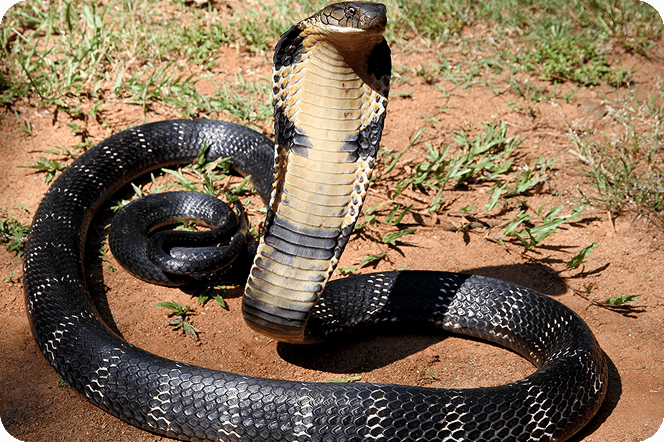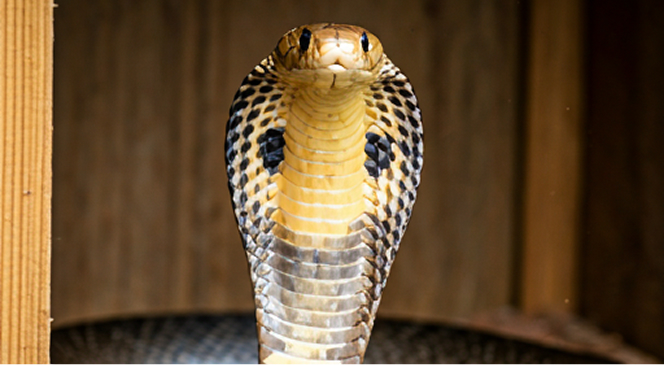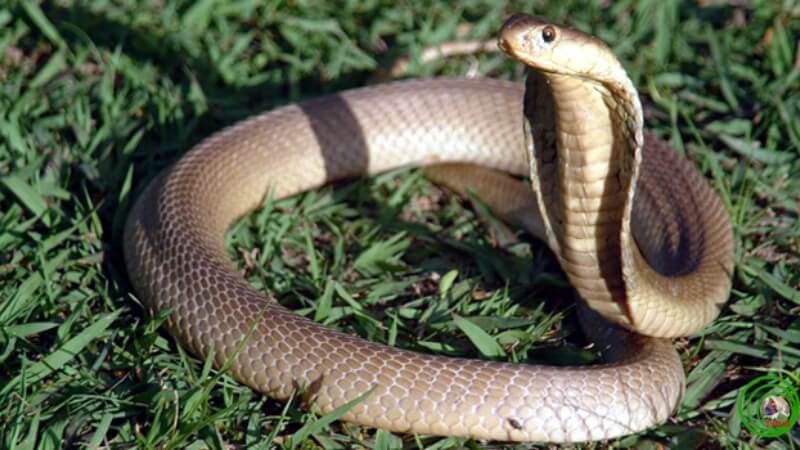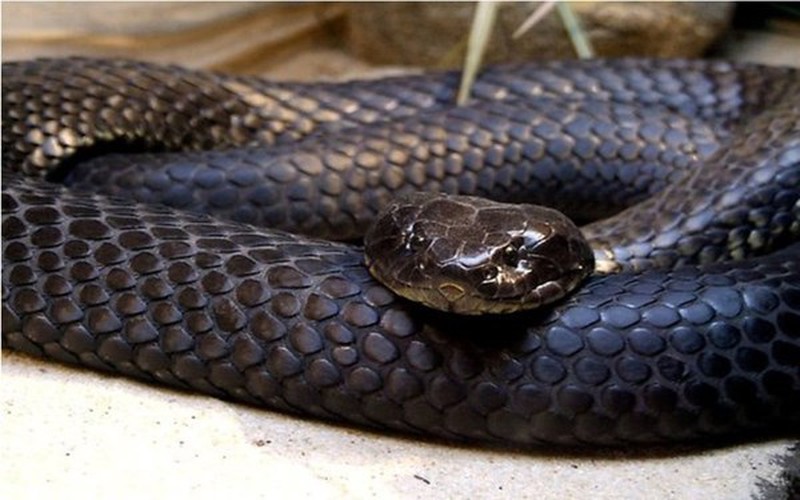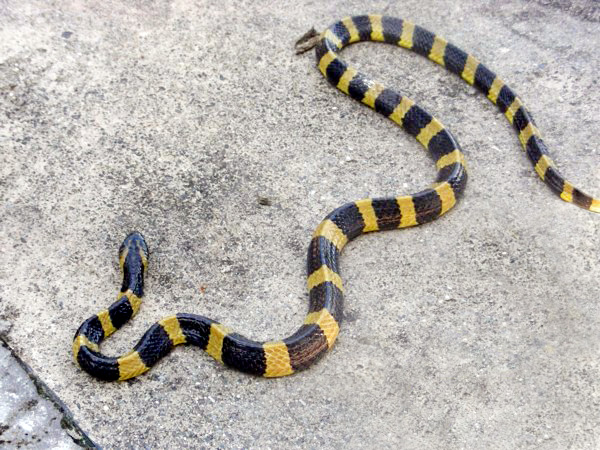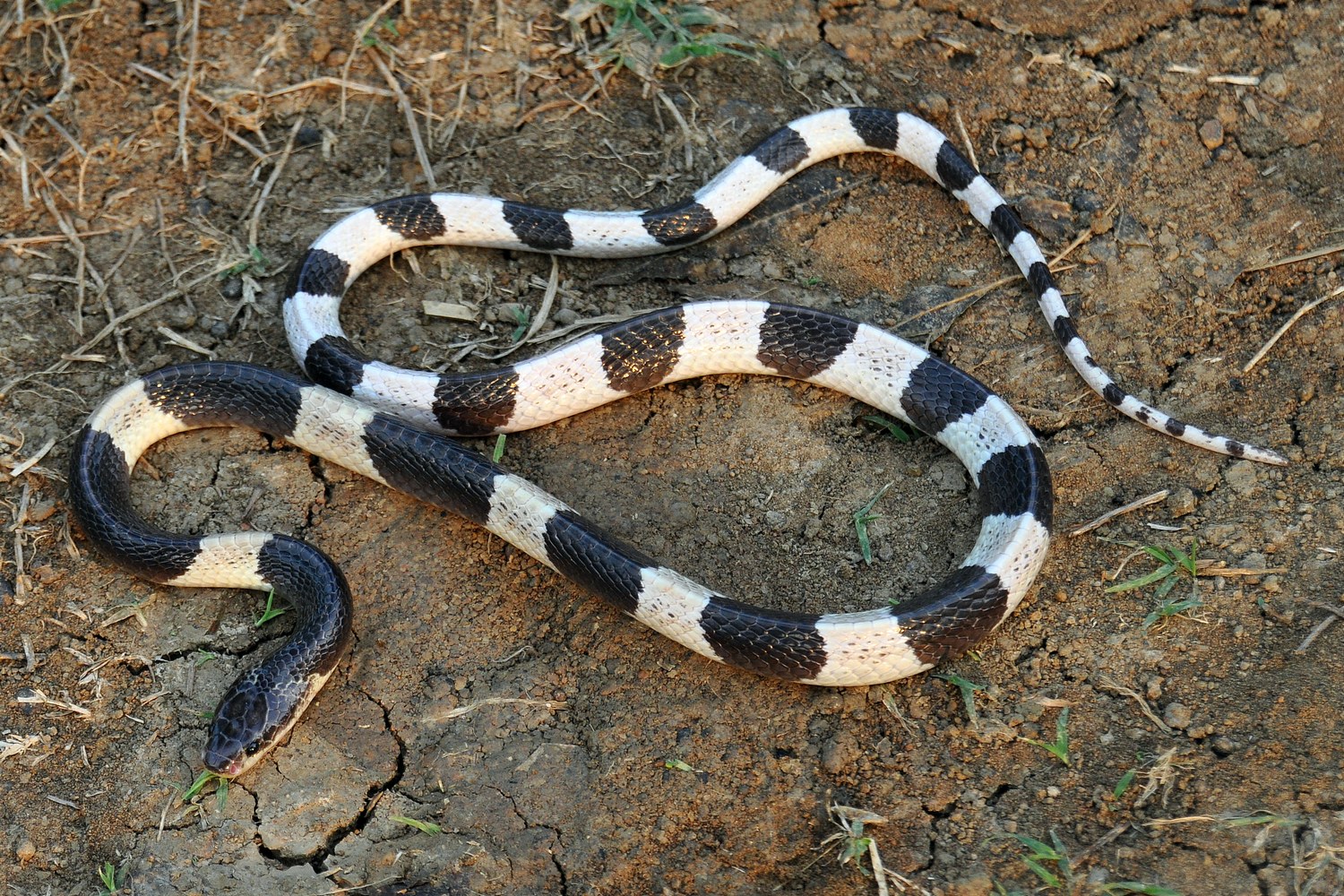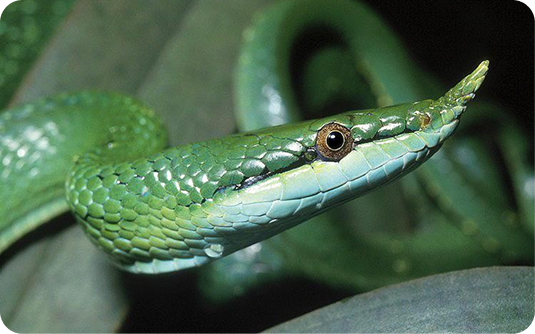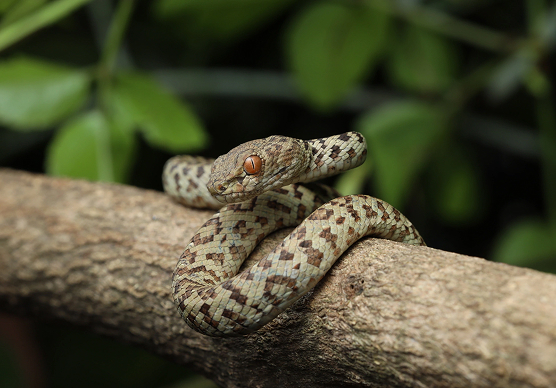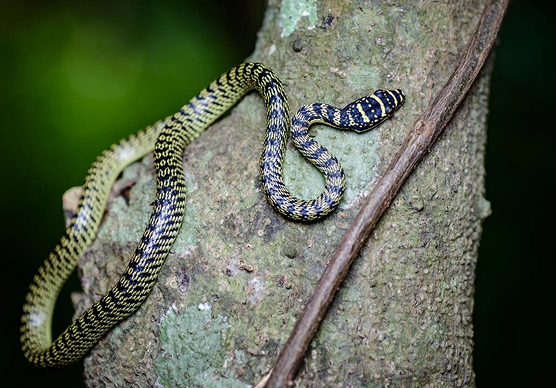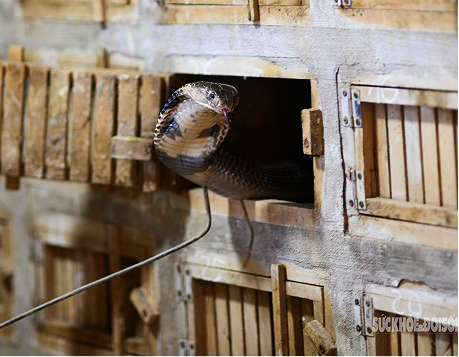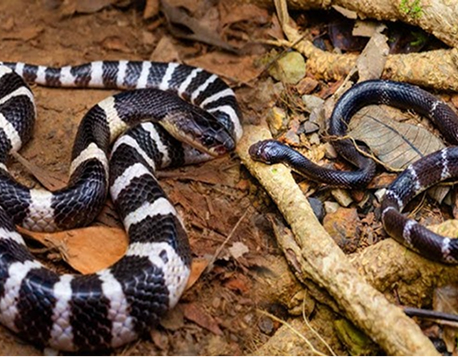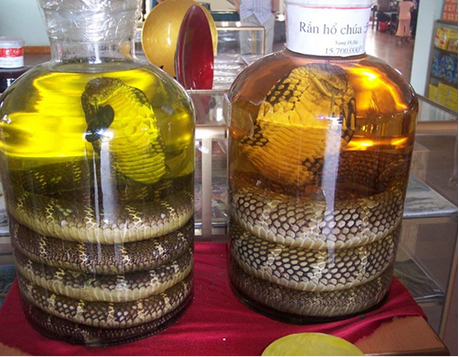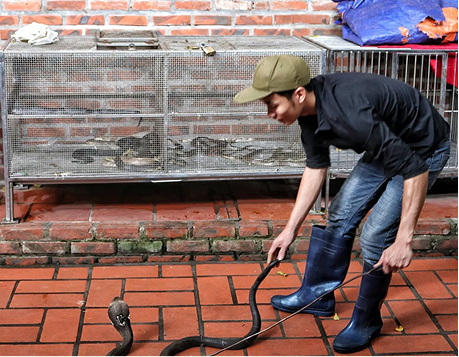


- Size: Ophiophagus Hannahs can reach a maximum length of 585 cm . Males are generally longer and heavier than females, easily reaching lengths of 4 meters or more with weights of 6–10 kg (up to 16 kg ), while females typically reach lengths of 2.5–3 meters.
- Color:
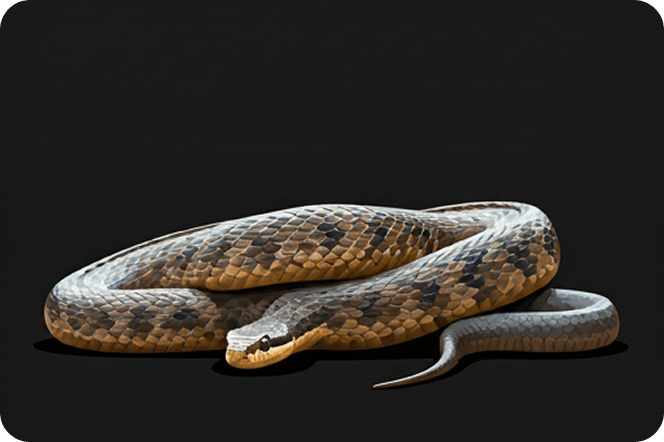
- In adult individuals: The dorsal surface is light brown, yellowish-brown, olive, or black depending on the distribution area. In India and the northern regions (including Indochina), the body is usually darker (black or dark brown). There are 27–48 pale horizontal V-shaped stripes.
- In juveniles: The body is solid black or dark brown with contrasting bright white or yellow horizontal stripes. This pattern changes completely when they reach a length of 100–120 cm (approximately 12–18 months old).
- Head: The head is fairly short, oval-shaped, thick and broad with bulging temples. Eyes are medium-sized with round pupils. Uniform and unpatterned in adults, the same color as the body or lighter. Throat is orange-yellow or cream with irregular dark brown mottling.
- Body: The body is slender and stocky in adults. It is always cream, yellowish-cream, or light gray in the front, followed by broad black horizontal stripes. The belly behind the neck gradually turns yellowish-brown, then light brown, and finally gray or black in darker specimens.
King Cobra
King Cobra
- Poisonous
- Rare
- Do not touch.
- Snake repellent is ineffective.
King Cobra ( Ophiophagus) Hannah Cantor (1836) is the longest venomous snake in Vietnam. They are very fast, strong, and considered one of the most dangerous venomous snakes in the world.
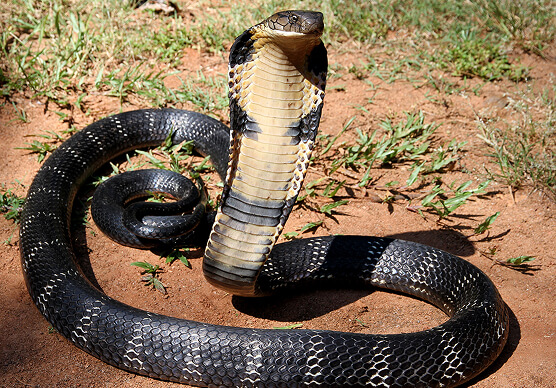
- Habitat: This species is primarily diurnal, active from early morning to dusk, but is sometimes found foraging at night. It lives in a variety of environments from dense forests and bamboo groves to plantations and even near villages. King cobras are ground-dwelling but are excellent climbers and swimmers.
- Reproduction: King cobras have a unique reproductive behavior, being the only snake species where the female builds her own nest of dry leaves and protects her eggs. Females lay 7–49 eggs per clutch. The eggs are incubated at a stable temperature of 23–28°C and hatch after 60–90 days. Newly hatched young are approximately 45–55 cm long .
- Often perceived as aggressive, it is actually a shy and wary snake, usually trying to escape when disturbed. However, if cornered or when defending its nest, it will raise the front third of its body, spread its hood, hiss loudly, and prepare to attack. This species does not spit venom.
- Diet: It primarily feeds on other snakes such as pythons, rat snakes, kraits, cobras, and even vipers. It also eats monitor lizards, mice, and rabbits. King cobras have been recorded eating their own kind.
1
Reassure the victim
Keep the victim still and limit movement to slow the spread of the venom. Do not allow the victim to walk around.
2
Immobilize the wound
Clean the bite wound with soap and water. Apply a light compression bandage (not a tourniquet) above the bite, keeping the bitten area lower than the heart.
3
Go to a medical facility
Transport the victim to the nearest hospital as soon as possible. If possible, take a picture of the snake so the doctor can identify the appropriate antivenom.
DO NOT cut the wound, DO NOT suck out the venom, DO NOT apply folk remedies.
- This is one of the most dangerous snakes in the world. A king cobra bite should be considered an absolute medical emergency.
- When bitten, victims typically experience systemic symptoms such as severe localized pain, widespread swelling , nausea, dizziness, drowsiness, drooping eyelids, difficulty speaking, difficulty swallowing, muscle paralysis, and ultimately respiratory failure leading to death. This is because the venom is primarily neurotoxic , affecting the central nervous system, and cardiotoxic .
- Specific antivenom should be administered as soon as possible. If severe respiratory distress occurs, the victim should be intubated and given ventilatory support.
SPECIES INFORMATION
Surname:
Elapidae
Snake species:
Trimeresurus
Species:
T. albolabris
Common name:
King Cobra
Nameplate:
King Cobra
Distribution area
Paracel Islands
Spratly Islands
Distribution : Widely distributed throughout the country.